
Winter Sensory Tips: Helping Your Child Stay Regulated All Season Long
During the winter months, children often spend more time inside and have fewer opportunities for active outdoor play. This change in routine can impact your child’s ability to stay regulated, focused, and comfortable throughout the day. Many families notice bigger emotions, increased restlessness, or overall difficulty participating in daily routines.
A helpful approach to these challenges would be a sensory diet! A sensory diet is an individualized plan of physical activity and sensory experiences designed to help regulate the nervous system. These activities can be woven into daily routines and easily adapted for home.
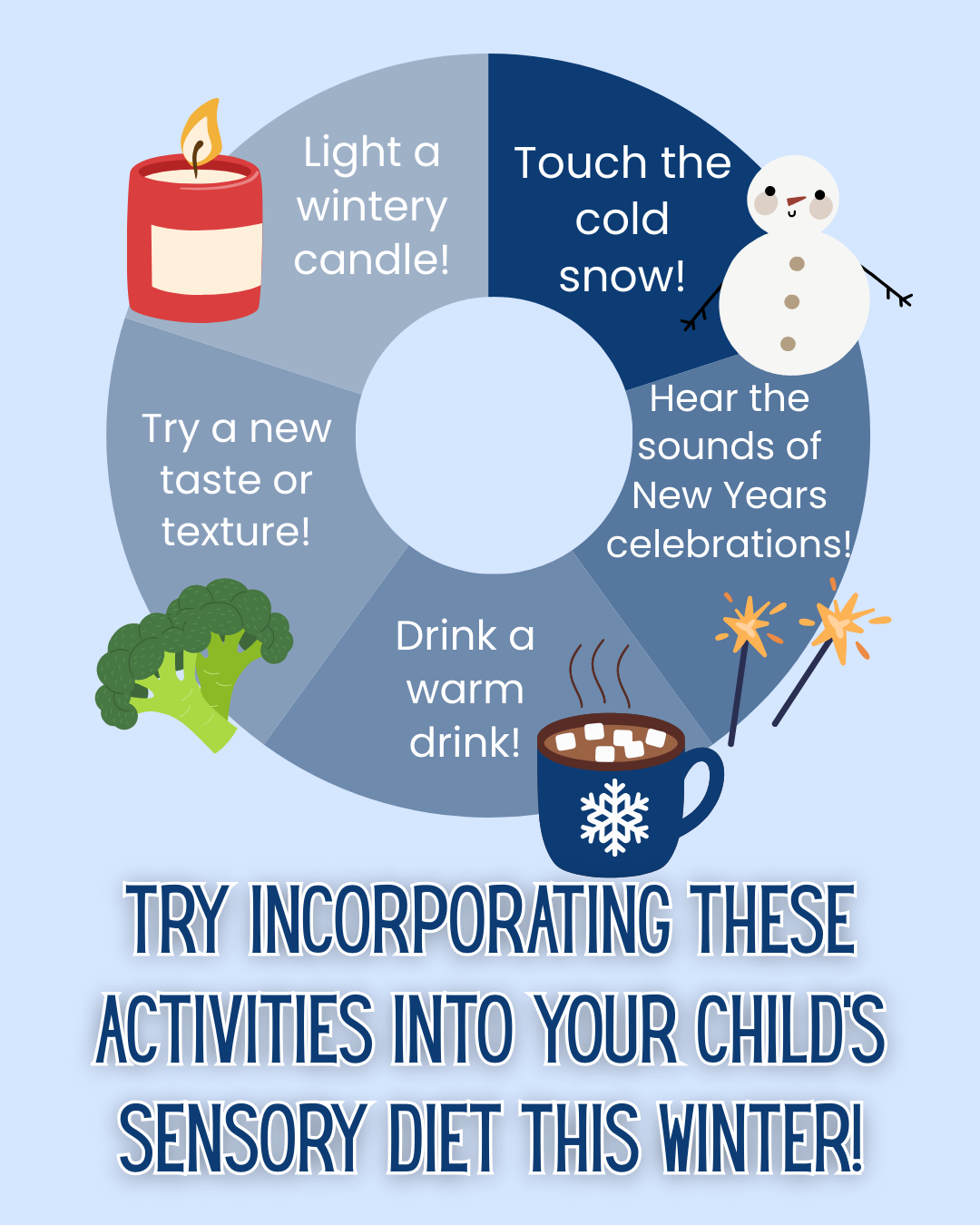
Below are examples of winter-friendly sensory activities organized by type. These are general ideas—an occupational therapist can help tailor them to your child’s specific sensory needs.
Proprioceptive Input (“Heavy Work”)
Proprioceptive input helps children understand where their body is in space and how much force to use during play, writing, eating, and other daily activities. Kids naturally get lots of this “heavy work” through running, climbing, jumping, activities that often decrease during winter. Without this input, children may seem more restless or more easily frustrated. Adding intentional heavy work indoors gives their muscles and joints the deep pressure they need to feel grounded, calm, and organized.
Winter-friendly ideas:
Pushing a laundry basket “sleigh” filled with pillows or stuffed animals
Couch cushion crashing (safe, supervised jumping and falling)
Wall push-ups or animal walks (bear crawl, crab walk, penguin walk)
Practicing yoga or balance exercises (kid-friendly follow-along videos on YouTube!)
2. Vestibular Input (Movement)
Vestibular input comes from movement—spinning, rolling, swinging, sliding, and running. These activities help children develop balance, coordination, and attention. In the winter, kids lose access to outdoor play structures and wide-open spaces where they get this natural movement. When vestibular input decreases, children may appear more fidgety, seek movement, or have trouble sitting for schoolwork. Structured indoor movement breaks can help give their brain the motion it needs to stay alert and more regulated.
Winter-friendly ideas:
Indoor obstacle course using pillows, painters’ tape, tunnels, or furniture
Scooter board races down hallways
Bouncing on exercise balls, mini trampolines, etc.
Steppingstones across different levels (use pillows, couch cushions, etc)
3. Tactile play (Touch & Texture Exploration)
The tactile system helps children interpret touch, everything from soft and cozy textures to messy or unexpected sensations. Outdoor play exposes children to a wide mix of sensory experiences—grass, dirt, leaves, water, sand, and more. In the winter, kids often wear layers, gloves, and hats, which limit direct touch and can increase sensitivity. Children may become more reactive to textures or avoid messy play altogether. Providing intentional tactile activities indoors helps children continue exploring textures, building tolerance, and supporting skills like dressing, handwashing, and feeding.
Winter-friendly ideas:
“Snow” sensory bin with cotton balls, pom poms, scoops
Blanket forts with different textures (plush, fleece, knit)
Sensory walk/crawls through rugs, bubble wrap, towels
Finger painting, shaving cream trays, bean bin, frozen toys to chisel out, etc!
4. Oral motor (chewing, sucking, blowing)
The oral-motor system is closely connected to self-regulation. Chewing, sucking, and blowing all activate muscles in the jaw and face, which can be very calming and organizing for many children. Oral input can help with focus, reduce mouthing behaviors, and support kids who seek strong sensory input when bored or dysregulated—especially during long winter days spent inside. Offering safe, purposeful oral-motor options can help meet these needs appropriately.
Winter-friendly ideas:
Chewy snacks: bagels, dried fruit, crunchy veggies
Warm drinks through straw: cocoa, apple cider
Blowing activities: cotton ball “snowstorm” races, bubbles, blow through a straw with pom poms
Offering chewy toys as needed
Using Sensory Activities to Build a Routine
A sensory diet works best when it becomes part of your child’s daily routine. Here are some practical ways to create consistency:
Start with transitions: Try adding a few minutes of heavy work before mealtime, homework, or bedtime.
Offer choices: Kids often regulate better when they get to pick from 2–3 options.
Keep activities short: Many sensory activities only need 3–5 minutes to make a difference.
Observe and adjust: If your child becomes overstimulated, overexcited, or dysregulated, scale back or shift to calming input like deep pressure or slow movement.
Make it fun: Turn activities into games, pretend play, or seasonal themes.
Local Community Resources
Indoor Play Spaces (Pittsburgh & Surrounding Areas)
Indoor play spaces can provide opportunities for climbing, jumping, swinging, and crashing—activities that support vestibular and proprioceptive input in a safe environment.
Families can explore a list of indoor play spaces in and around Pittsburgh here:
Kidsburgh: 15 Fun Indoor Play Spaces in Pittsburgh and the Surrounding Region https://www.kidsburgh.org/15-fun-indoor-play-spaces-in-pittsburgh-and-the-surrounding-region/
2. Public Libraries
Local libraries are an excellent and often overlooked sensory-friendly resource. Many libraries offer:
Sensory-friendly story times
Open play or movement-based programs
Quiet, predictable environments with visual supports
3. Community Centers & Recreation Programs
Local community centers often offer:
Open gym times
Parent-and-child movement classes
Seasonal indoor recreation programs
4. Occupational Therapy Support
If you notice your child continues to struggle with regulation despite trying sensory strategies at home, an occupational therapist can help develop a sensory diet tailored specifically to your child’s needs. OT services can support families with individualized strategies, parent education, and home-based recommendations that fit into daily routines. Call our office at 724-888-2548 to get an evaluation set up!