
6 AAC Adventures to Try this Summer
When school routines end for the summer, AAC use can sometimes become less consistent. The good news? Summer is also one of the best times to build communication naturally through fun, motivating, real-life activities.
AAC is designed to be used across all settings, not just during therapy sessions. Community outings like the playground, pool, zoo, grocery store, or ice cream shop can create meaningful opportunities for children to communicate in ways that feel natural and functional.
AAC is not only for requesting wants and needs. It can also help children join conversations, be silly, make jokes, share emotions, ask questions, and express excitement. When an activity is preferred and fun, children are often more motivated to explore language and participate.
Below are simple ways to support AAC use during common summer activities.
Before You Go: A Few Quick AAC Tips
Model without pressure. Use the device yourself to show words and phrases. Your child does not have to copy you every time.
Preview vocabulary ahead of time. Look for important words before the outing, such as swim, cold, more, help, go, or all done.
Give wait time. After modeling or asking a question, pause and give your child time to respond in their own way.
Keep it flexible. A perfect sentence is not the goal. Real communication is the goal.
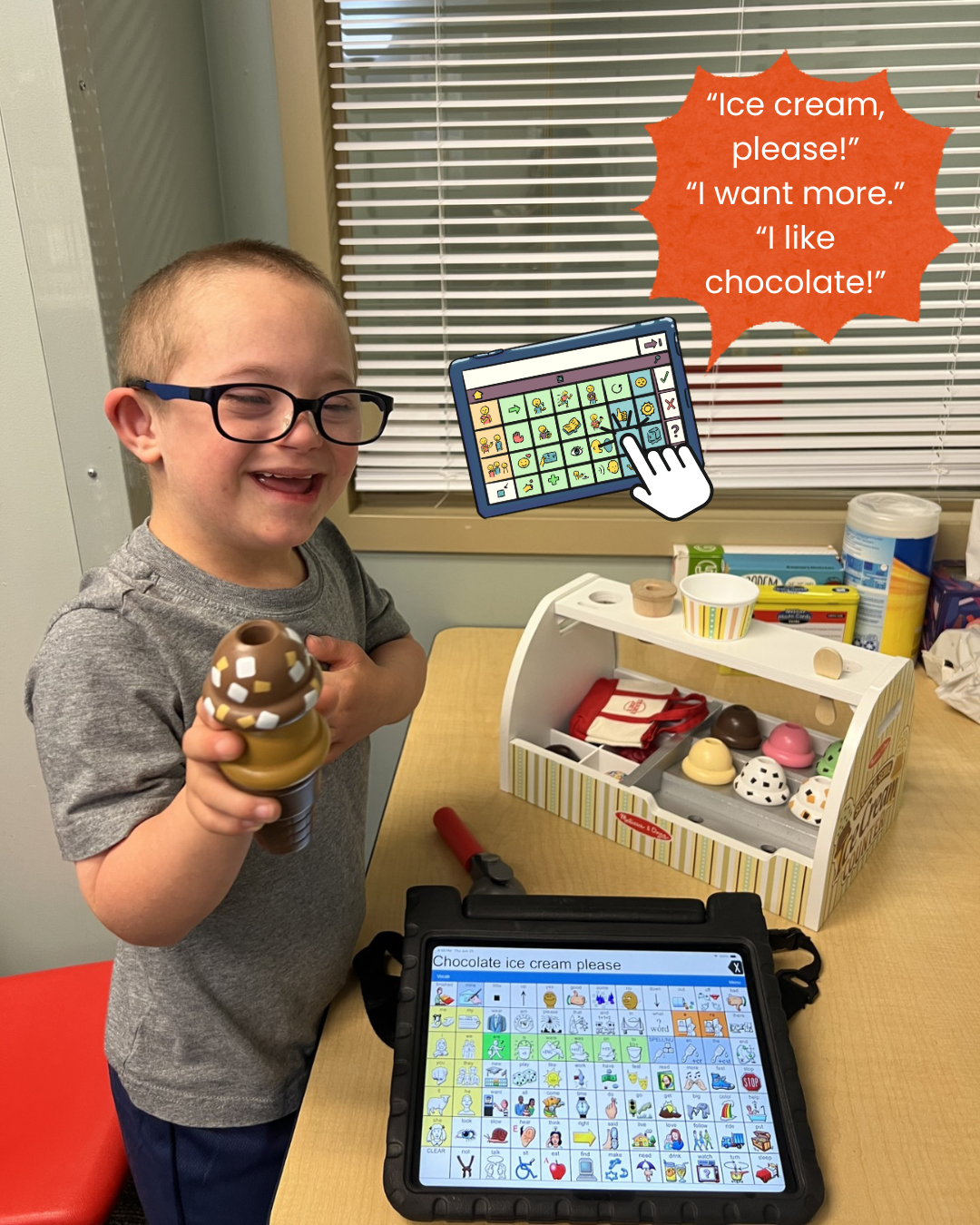
1. Ice Cream Shop
An ice cream trip is a fun, low-pressure way to practice choices, requests, greetings, and describing words.
Preview words before entering. Model flavors like strawberry, vanilla, and chocolate, along with descriptors such as cold, sweet, yummy, or sticky.
Let your child order in a way that feels comfortable. Some children may press one button for their flavor, while others may build a full message ahead of time and press “speak” when it is their turn.
Practice social language. Simple phrases like “hi”, “please”, “thank you”, and “goodbye” are meaningful and easy to use in the moment.
Comment together. Try phrases like “I like it”, “it is cold”, “so good”, or “more please”.
Try this: Before you go, help your child prepare a simple message such as, “I want vanilla ice cream, please.”
2. Playground or Park
The playground is full of action words, social opportunities, and chances to comment on exciting experiences.
Model what you see and do. Use words and phrases like big swings, tall slide, little bird, sunny sky, go fast, or stop.
Support requests during play. Give opportunities for messages such as push me, my turn, go fast, help, or more.
Show that AAC is for commenting, too. Model phrases like “wow”, “I like that”, “so high”, “that was fun”, or “I did it!”
Encourage peer interaction. Try simple social phrases such as “Hi”, “What’s your name?”, “Want to play?”, or “Come with me”.
Talk about it afterward. After leaving, help your child share a favorite part, such as “I liked the swings” or “The slide was fast”.
Try this: Pause before pushing the swing or going down the slide to create a natural reason for your child to communicate.
3. Pool or Waterpark
Water play is motivating, but it may require some planning to keep AAC accessible and protected.
Plan for water safety. Consider a waterproof case or a low-tech option, such as a laminated board with important words and phrases.
Preview water vocabulary. Model words like splash, swim, jump, cold, wet, float, towel, and dry before arriving.
Offer chances to request. Try phrases such as “more water”, “jump again”, “help me”, “my turn”, or “break please.”
Model comments during play. Use messages like “That’s cold!”, “Big splash!”, “I’m having fun!”, or “I’m tired.”
Support independence. Make sure important needs are available, such as bathroom, hungry, thirsty, all done, and help.
Try this: Bring a simple laminated “pool words” page if the device cannot safely go near the water.
4. Zoo or Aquarium
Zoos and aquariums are great for labeling, describing, asking questions, making choices, and sharing opinions.
Look at pictures before the visit. Model animal names and descriptive words like big elephant, sleeping lion, funny penguin, or colorful fish.
Let your child help choose what comes next. Use words such as want, go, see, more, finished, or next.
Model observations. Try phrases like “The monkey is climbing”, “I like sharks”, “The fish are swimming fast”, or “That animal is loud”.
Practice questions. Model questions such as “Where is it?”, “What is that?”, or “Can we see the giraffes?”
Share the favorite part. At the end of the visit, help your child tell someone what they liked best.
Try this: Take a picture of your child’s favorite animal and use it later to talk about the trip again.
5. Farmers Market or Grocery Store
Shopping trips can support communication about choices, categories, colors, textures, and social routines.
Model food words and descriptions. Try red apples, sweet strawberries, crunchy carrots, big watermelon, or cold milk.
Let your child make choices. Ask what snack or meal item they want to help pick out.
Practice greetings and manners. Model “hi”, “please”, “thank you”, and “bye” when interacting with vendors or cashiers.
Extend the conversation at home. Talk about what you bought, tasted, cooked, or want to buy next time.
Try this: Give your child a small “shopping job,” such as finding apples, choosing a snack, or telling the cashier thank you.
6. Summer Scavenger Hunts
Almost anything can become a scavenger hunt, and this is a fun way to practice vocabulary in real life and on the AAC device.
· Choose 8 to 10 items. Pick things your child can find in the environment and on their device.
· Use any location. Try the park, grocery store, doctor’s office, backyard, car ride, or waiting room.
· Model each word as you find it. For example, in a doctor’s office you might look for tissue, pen, puzzle, baby, book, frame, computer, candy, doctor, or nurse.
· Celebrate all communication. Pointing, looking, reaching, vocalizing, signing, or using AAC can all be meaningful ways to participate.
Try this: Make a quick picture list before you leave, then help your child find each item in real life and on their device.
Remember: It Does Not Have to Be Perfect
AAC modeling does not have to be perfect to be helpful. Increased exposure to the device, even in small moments, can make a meaningful difference over time.
Every interaction counts. When families use AAC during motivating summer activities, children get more chances to build communication skills, confidence, and independence in the places that matter most.
Parent takeaway: Choose one summer activity this week and model just a few helpful words before, during, and after the outing. Small, consistent moments add up.