
Need to Cancel a Therapy Session? Telehealth is Your Solution!
Every caregiver has been there: your child is sick, traffic is gridlocked, a babysitter canceled or getting out the door is just impossible for the day. There are occasions when making it to an in-person therapy session is too challenging and canceling seems like the only option. These situations are the perfect opportunity to give telehealth a try! Telehealth is a virtual alternative for your therapy session, and it can be a wonderful tool for the situations where in-person therapy is just not possible but how does it compare to an in-person session?
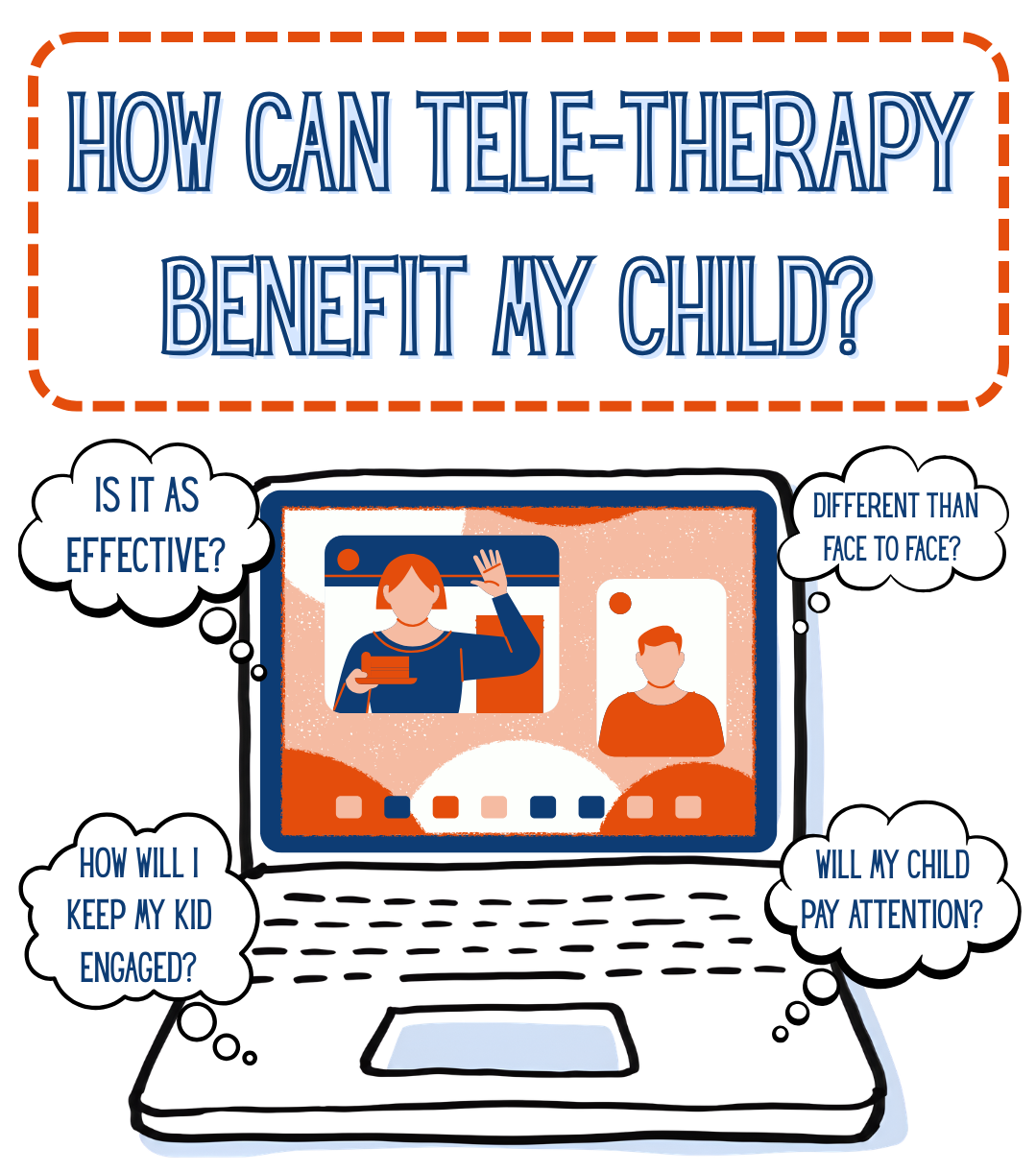
Telehealth in Comparison to In-person Therapy
While in-person therapy allows for more hands-on support, movement-based activities, closer observation and communication between the clinician and the child, when an in-person visit is not possible, telehealth can still provide meaningful support.
Telehealth appointments can be excellent for extending what is built in therapy to the home. Some children might be more comfortable in their own environment which can affect their speech production or content. Telehealth is a great lens for a therapist to observe what a child’s progress looks like in their natural environment. Telehealth can also help children generalize skills beyond a clinic setting.
Both have their strengths, and the best option is individual to the child, their therapy goals, family needs and clinical judgment.
Why Telehealth is Better Than Canceling
Canceling means the child misses a whole session worth of direct practice and individualized support. When telehealth is appropriate, it can help prevent the child from missing that support entirely and causing potential setbacks in their progress. Telehealth sessions still allow the therapist to check on progress, make corrections, when necessary, lead activities to build skills, adjust goals, answer questions from parents and provide activities for the week. This is all significant support to progression of skills towards goals. Telehealth can change a “today’s a wash” situation into a productive session.
Telehealth Allows for Consistency
A key to the success of therapy is the consistent skill building, challenges and trials each session brings. Repetitive practice brings the patient closer to meeting their goals. Missing one session can interrupt this routine. While just one session is not going to completely change the trajectory of one’s success, absences can easily accumulate and delay the progress of a child.
Consistency is especially important when considering therapy with children. It is crucial they receive regular support to become proficient in their goals. For most children, the skills they build in therapy need to be repeated many times over before they become natural for use outside of a session. Consistent practice helps bridge the gap between imitating a skill and using it independently. A virtual session allows the child to continue their progress where the alternative of canceling would have removed an opportunity to grow entirely.
Many children also value routines and appreciate what they are used to being continued or adjusted. It is good that therapy is a part of their routine and we do not want to disrupt that, when possible, by avoiding a cancellation.
Telehealth for Families
Telehealth allows flexibility and a backup plan for caregivers. It can reduce stress on the family related to transportation, weather, illness or time conflict. Virtual sessions are a wonderful tool for a family to fall back on when cancellation may seem like the only option. These sessions can often involve a family member, therapist and child working together to establish how they can meet their goals at home and extend skills beyond the session. These sessions are a perfect opportunity for parent education where therapists can coach families on how to support their child’s progress at home!
Benefits for Children
Of course, children benefit more from virtual sessions in comparison to cancellation, but there are also many unique benefits a telehealth session can offer as compared to an in-office visit. For example, children can be more comfortable in their home which can change the way a therapy session works. A therapist will want to capitalize on the opportunity to see a child in their natural setting and more comfortable than they may be in an in-person session. It can also be useful for a therapist to be able to incorporate toys and books that the child is familiar with and engages with often. Overall, telehealth supports the extension of skills built in therapy into the home in various ways.
Tips for a Successful Telehealth Session
It is important to be prepared for your telehealth session as far as the setup goes. When switching an appointment to telehealth our office will suggest what toys or supplies should be accessible. Typically, this will be paper, markers or crayons, a favorite toy and a mirror for Speech; a preferred snack and a less-preferred snack, appropriate utensils, and a drink for Feeding; paper and pencil, scissors and glue, and playdough for OT; and an open area to move around in, appropriate footwear, and a therapy band or stretching strap for PT.
It is best to find a quiet place for the session and set up the device in a way that supports physical needs. Sitting at a desk for a full session might be challenging so moving therapy to the floor might be best for some. Before the session, charging the device or ensuring a charger is accessible is a great way to prepare. It is also helpful to check the internet connection, especially if the virtual session is taking place outside of the home. As a caregiver, plan to stay close by to offer support if needed.
Before you Cancel, Consider Telehealth
While virtual sessions may not replace every benefit of in-person therapy, they can still offer meaningful practice, support and progress when getting to the office is not possible. Telehealth offers flexibility for the days that in-person therapy seems impossible. During busy and unpredictable times, virtual sessions are a productive option to continue making progress.
Even if you are unsure if telehealth is a good fit for your child, it is worth a try! If our therapist finds that they are having trouble engaging with your child virtually, they are more than happy to pivot to parent education or end things early and get a make-up scheduled. There is no harm in trying it out, and kids surprise us all the time with what they are capable of!
Written by Jaime Donatucci