Torticollis: Why Early Pediatric Physical Therapy Matters
Noticing that your baby consistently turns their head to one side? Having difficulty with tummy time or noticing a flat spot developing on your baby's head? These may be signs of torticollis, a condition that can affect your baby's neck movement, positioning, and early development.
The good news is that early identification and treatment can make a meaningful difference! Pediatric physical therapy can help improve your baby's neck movement, support symmetrical development, and give you the tools to encourage progress at home.
What Is Torticollis?
Torticollis occurs when a baby has difficulty turning or holding their head comfortably in both directions. It often causes a baby to tilt their head toward one shoulder while turning their chin toward the opposite side. This can lead to a strong preference for looking in one direction.
Torticollis can affect how your baby moves, rests, feeds, and plays. Without intervention, a persistent head-position preference may also contribute to an uneven head shape.
Signs Your Baby May Have Torticollis
Every baby develops at their own pace, but there are several signs parents can watch for, including:
Consistently tilting or turning their head toward one side
Difficulty turning their head equally in both directions
Strongly preferring one side during feeding, holding, or play
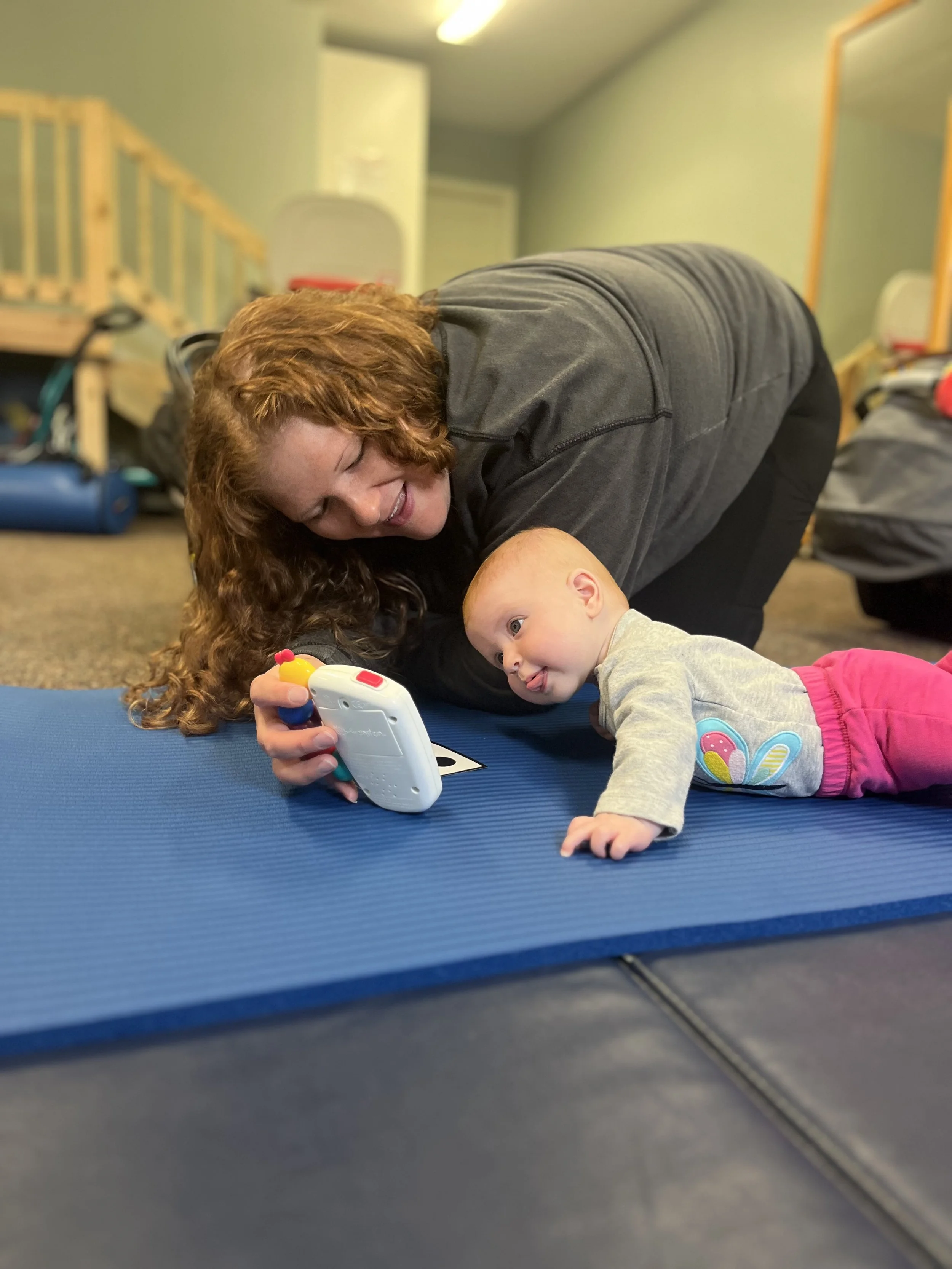
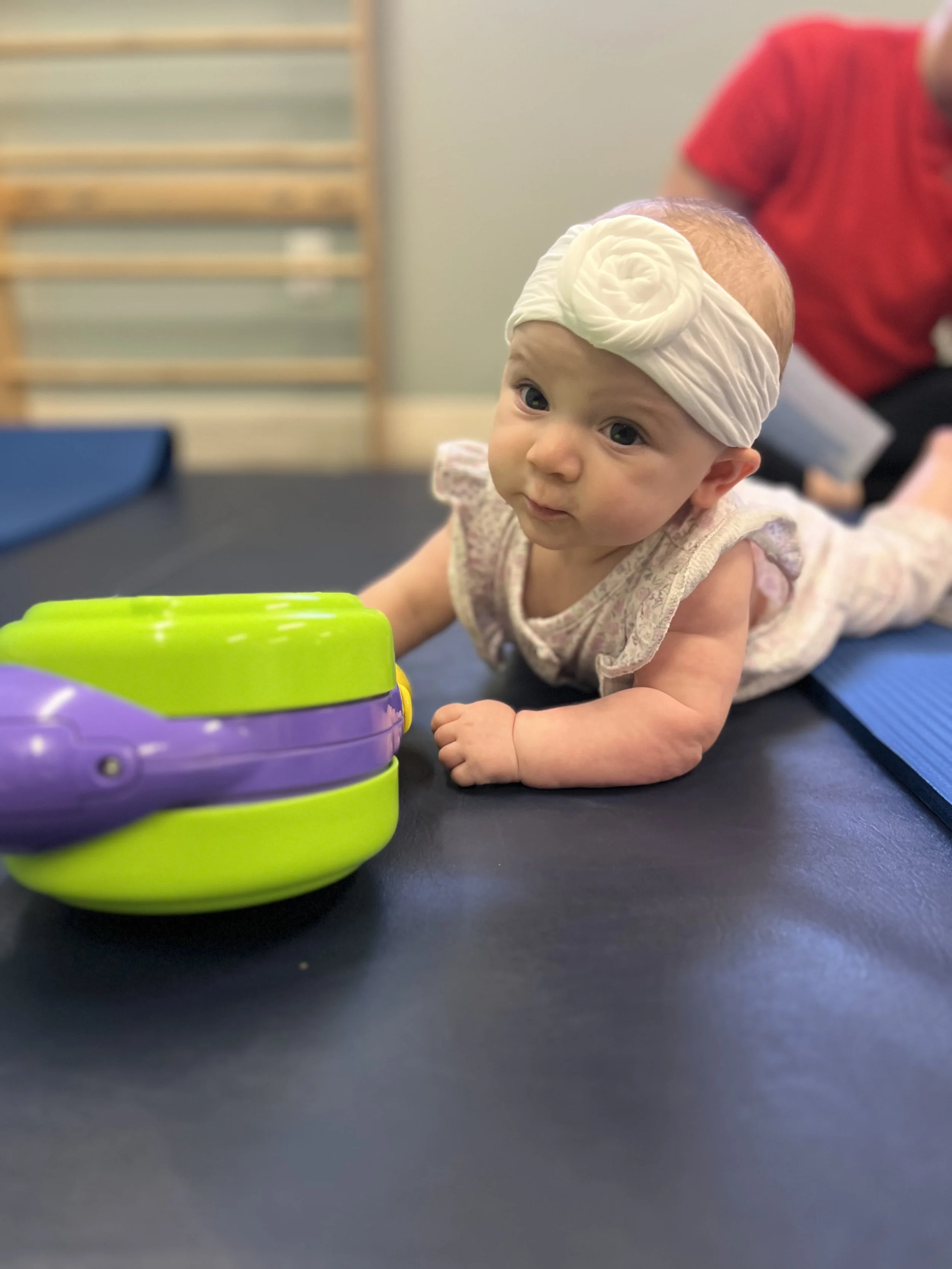
Difficulty tolerating tummy time
Developing a flat spot or uneven shape on the head
Showing differences in movement or strength from one side to the other
If you notice any of these signs, talk with your pediatrician about a pediatric physical therapy evaluation. You don't need to wait until your baby's head tilt becomes more noticeable or begins affecting other areas of development.
How Can Pediatric Physical Therapy Help?
A pediatric physical therapist will evaluate your baby's neck movement, strength, positioning, head shape, and overall motor development. This helps identify areas that may benefit from treatment and allows the therapist to create a plan tailored to your baby's needs.
Treatment may include:
Gentle stretching and positioning: Helping improve neck mobility and comfort when turning the head in both directions.
Strengthening activities: Encouraging your baby to develop balanced neck and trunk strength.
Positioning strategies: Helping your baby explore different positions during supervised awake time.
Tummy time support: Introducing strategies to make tummy time more comfortable and encourage symmetrical movement.
Parent education: Teaching you simple activities and positioning techniques to incorporate into everyday routines.
Small changes during feeding, carrying, playtime, and other daily activities can help reinforce what your baby is learning in therapy. Your physical therapist will show you which strategies are appropriate for your baby and how to use them safely.
Understanding Flat Spots on Your Baby's Head
Babies' skulls are soft and continue to grow rapidly during infancy. When a baby consistently rests their head in the same position, pressure on one area can contribute to flattening. Torticollis can increase this risk because turning the head in both directions may be difficult.
Two common types of positional head flattening include:
Plagiocephaly: Flattening on one side of the back of the head. This may also cause the ears or forehead to appear uneven.
Brachycephaly: Flattening across the back of the head, creating a wider or shorter appearance.
Head-shape concerns and torticollis can occur together, but not every baby with a flat spot has torticollis. A physical therapy evaluation can help determine whether neck movement, positioning, or motor development may be contributing to the concern.
Your pediatrician or physical therapist can also help determine whether additional evaluation or treatment is needed.
Why Is Early Torticollis Treatment Important?
Early evaluation can help your baby make progress while their movement patterns are still developing.
When torticollis is identified early, treatment can often begin before a strong head-position preference becomes more established. Addressing restricted neck movement and positioning concerns may also help reduce the risk of associated head-shape changes.
As babies grow, they develop new movement skills and become more active. While treatment can still help older infants, established movement preferences or head-shape concerns may take longer to address.
Early treatment also gives parents the opportunity to learn helpful strategies from the beginning, making it easier to incorporate therapeutic activities into daily routines.
Rather than waiting to see whether your baby outgrows a head tilt or movement preference, consider asking your pediatrician whether an evaluation is appropriate. An evaluation can provide reassurance, identify potential concerns, and help you understand the next steps.
Does My Baby Need Early Intervention or Outpatient Physical Therapy?
Depending on your baby's needs and eligibility, Early Intervention and outpatient pediatric physical therapy may both be helpful.
Early Intervention provides developmental services to eligible infants and young children, often in their home environment. Outpatient pediatric physical therapy offers individualized assessment and treatment in an office setting focused on movement, strength, positioning, and motor development.
In some cases, these services can complement one another to support your baby's progress.
Your pediatrician and therapy team can help you determine which services may be appropriate for your child.
You Don't Have to Wait to Get Help
If you've noticed a persistent head tilt, a preference for looking in one direction, difficulty with tummy time, or changes in your baby's head shape, we're here to help.
Our pediatric physical therapy team works with families to identify concerns early, support healthy movement, and provide practical strategies you can use at home.
Reach for Speech has immediate openings for outpatient pediatric physical therapy evaluations and treatment. You don't have to navigate these concerns alone!
Contact our office today at 724-888-2548 to learn more about scheduling an evaluation and taking the next step toward supporting your baby's development.