Tummy Time: A Strong Start
Surely, you’ve heard about the importance of tummy time for baby’s development. The “back to sleep, tummy to play” slogan emerged as an easy way for parents to differentiate safe positioning for sleep versus a great position for baby’s waking play time. For some, it falls into the “easier said than done” category. Let’s dig a little deeper into why it’s important–and how to navigate potential challenges and roadblocks.
First, it’s important to remember that the safest position for babies to sleep is on their back, on a firm mattress, without any soft items that could cover their face. A significant reduction in Sudden Infant Death Syndrome (SIDS) has occurred since the implementation of the “Back to Sleep” campaign to educate parents on safe sleep practices. While the change in sleep positioning has been amazingly successful in improving sleep safety, it has, in turn, reduced the amount of time that babies spend on their bellies which can impact motor development. For this reason, prioritizing tummy time for play has an enormous role in getting baby on track with developing those motor skills!
Babies can and should begin small bits of tummy time within the first several days of life. When closely supervised to ensure clear airways and while awake, it is safe to begin placing babies belly-down from day one, with extra care to avoid friction over the umbilical stump until it falls off. At this stage, babies may only reach a couple of minutes of tummy time a few times per day between feedings, diaper changes, and sleep. Try to be sure that they spend time with their head turned to both the right and the left each day. Your primary goal in the beginning is to create familiarity of the position early on–this can go a long way in paving the way for baby to tolerate spending time on their belly down the road. Placing baby on your chest while you’re semi-reclined is a great way to get things started!
As baby grows, wake times will increase and so should tolerance for tummy time. Aim for a daily total of around 30 minutes by 3 months of age, then to 60-90 minutes by 6-7 months of age. An easy rule of thumb is to add about 10-12 minutes of daily tummy time for each month of age. This allows ample time for baby to build muscle strength through the neck, shoulders, and arms while gently and slowly stretching out through the front of the body to prepare for rolling, sitting, crawling, standing, and walking.
Make it fun–add in bonding and play! Getting down to baby’s level for some face-to-face time is a great way to create a positive experience. Watching your facial expressions and hearing you talk or sing can “double up” the developmental value! High contrast toys or picture books, mirrors, and interesting toys are great ways to offer practice for focusing vision at varying distances, tracking moving objects with eyes, and head turning in all directions. Although use of a firm, flat surface packs the most punch for strengthening muscles against gravity, alternative positions such as using a tummy-to-tummy baby carrier or placing baby on a slight upward incline are also great alternatives.
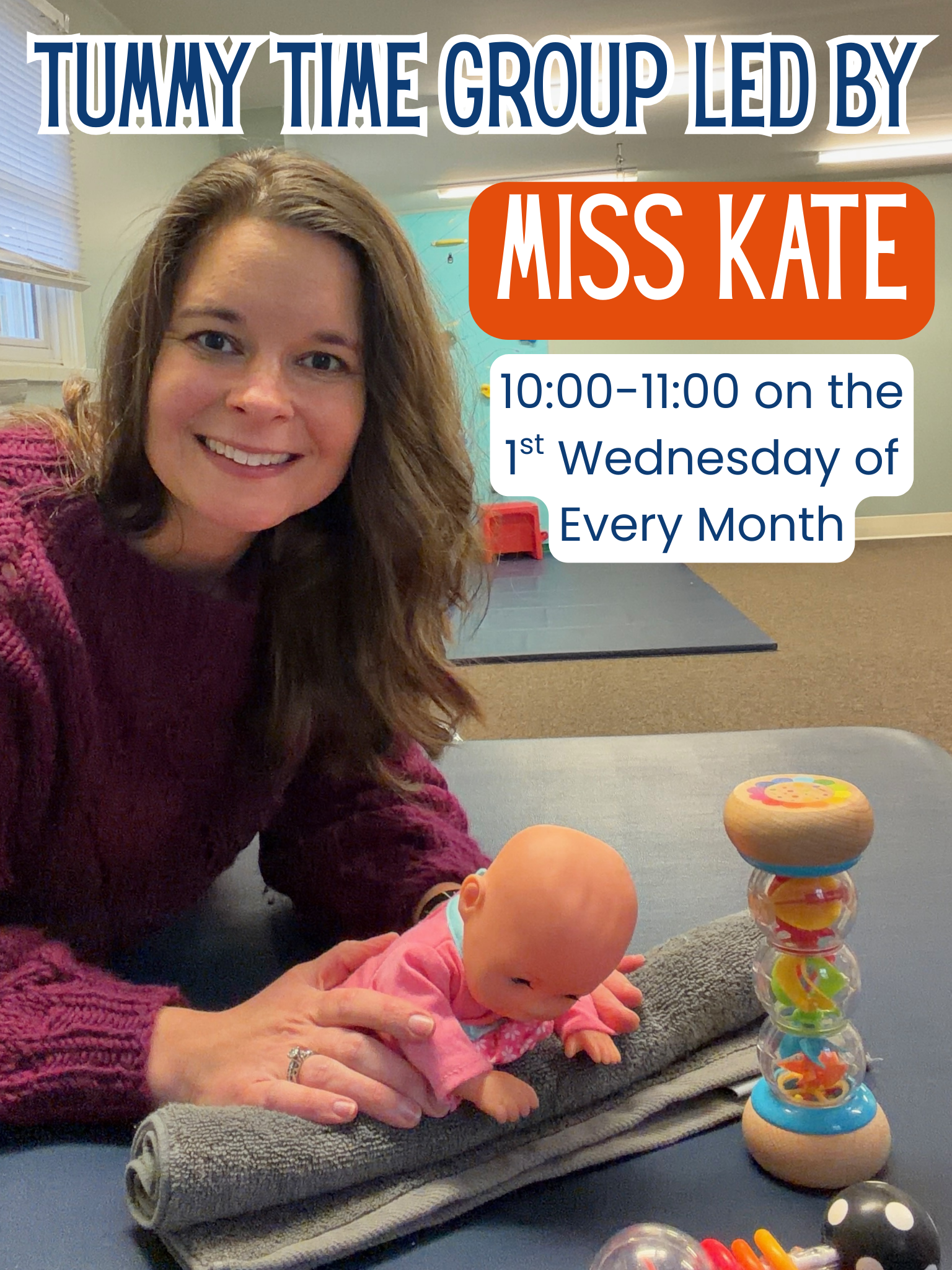
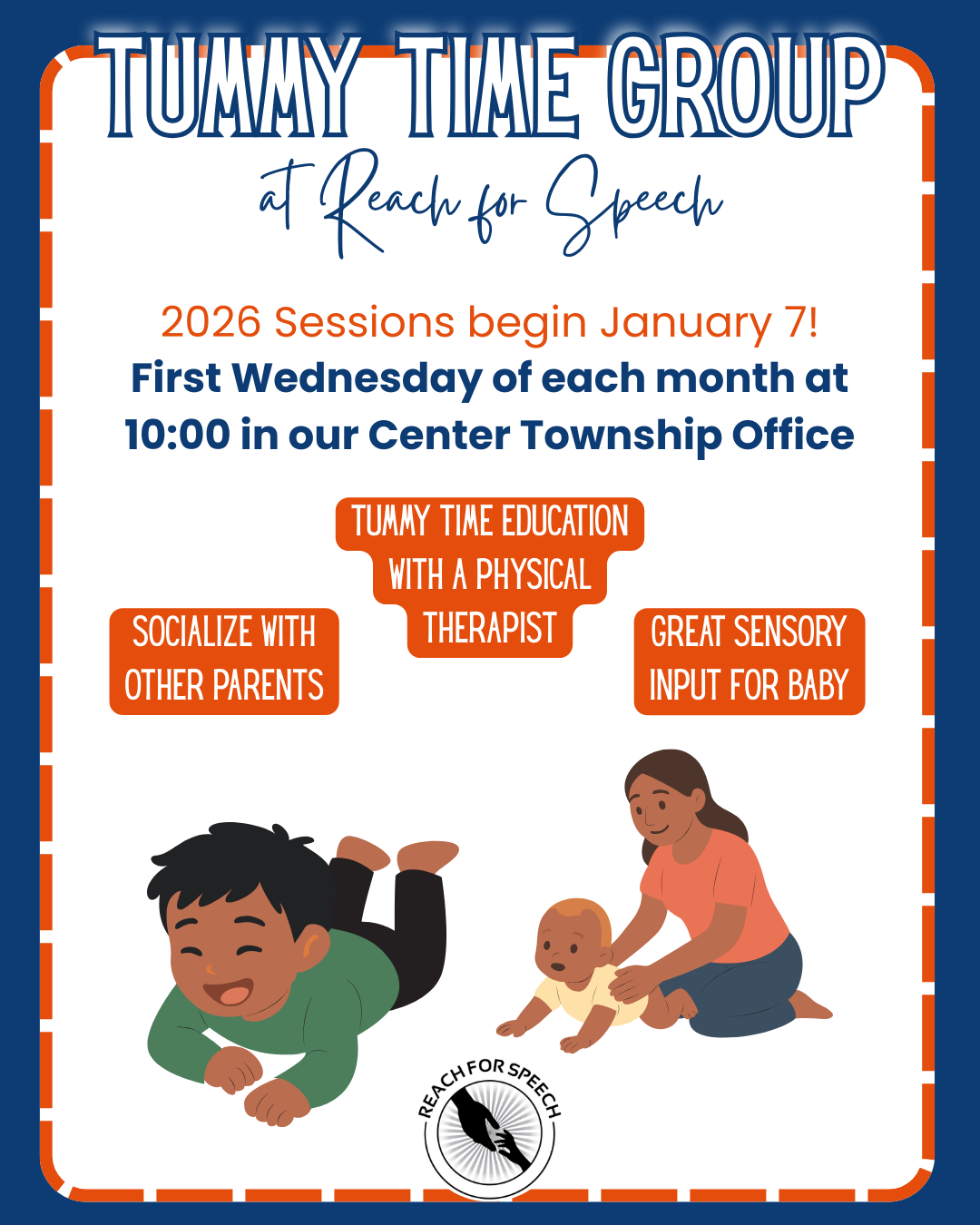
At Reach for Speech, we offer a monthly tummy time group for our youngest friends and their caregivers to explore and practice in a social setting! The group will meet on the first Wednesday of each month from 10-11 am in our Center Township office. It’s free to attend, and families do not need to be clients of Reach for Speech–visit our website to register. We welcome babies of all ability levels to this group–it’s a great experience for babies who are developing typically as well as babies who are at risk or showing signs of delays in development.
If you’re worried that your baby isn’t meeting their motor milestones or shows a preference toward one side of their body, we encourage you to call our office to schedule a physical therapy evaluation for a more personalized approach.